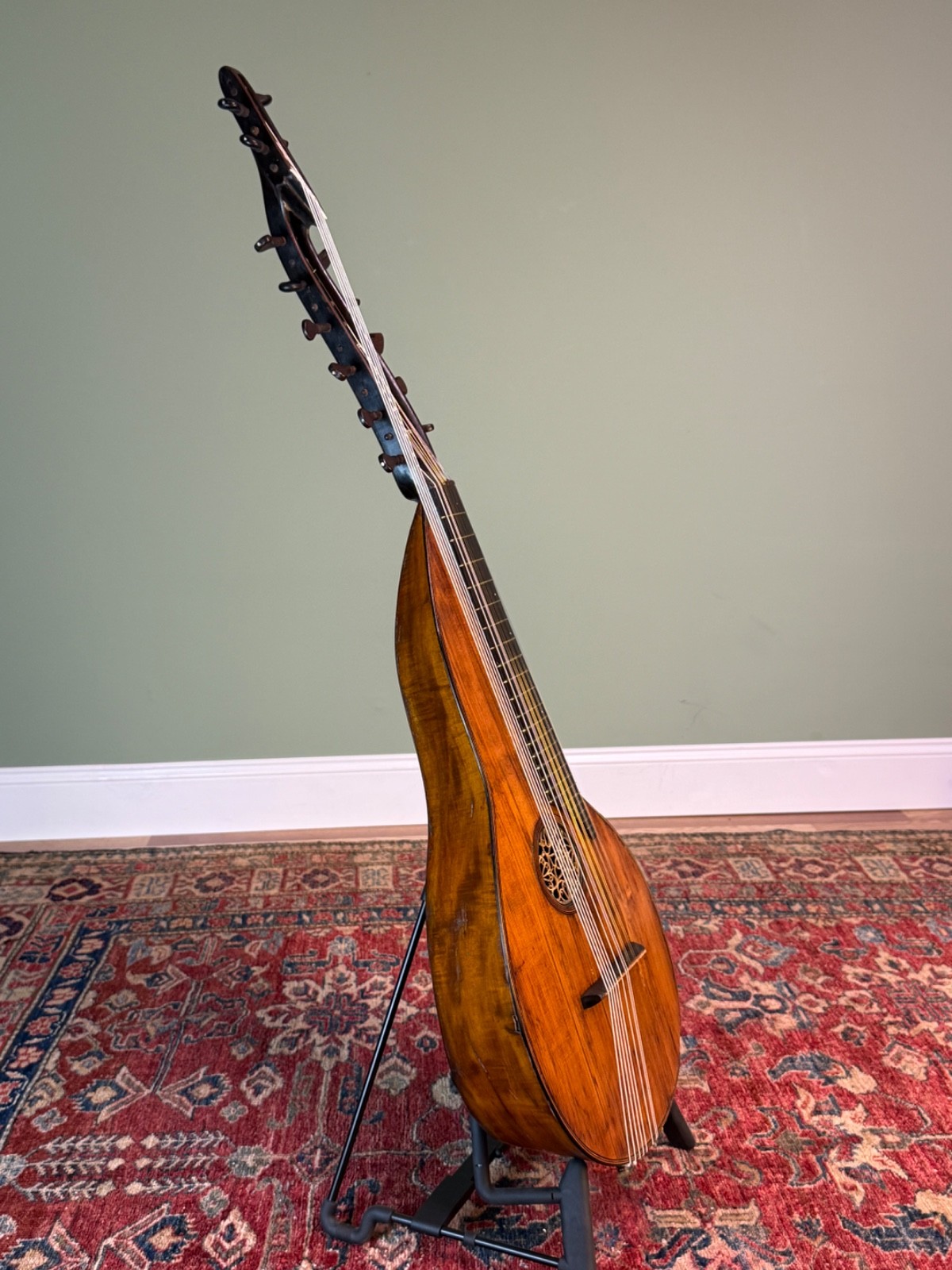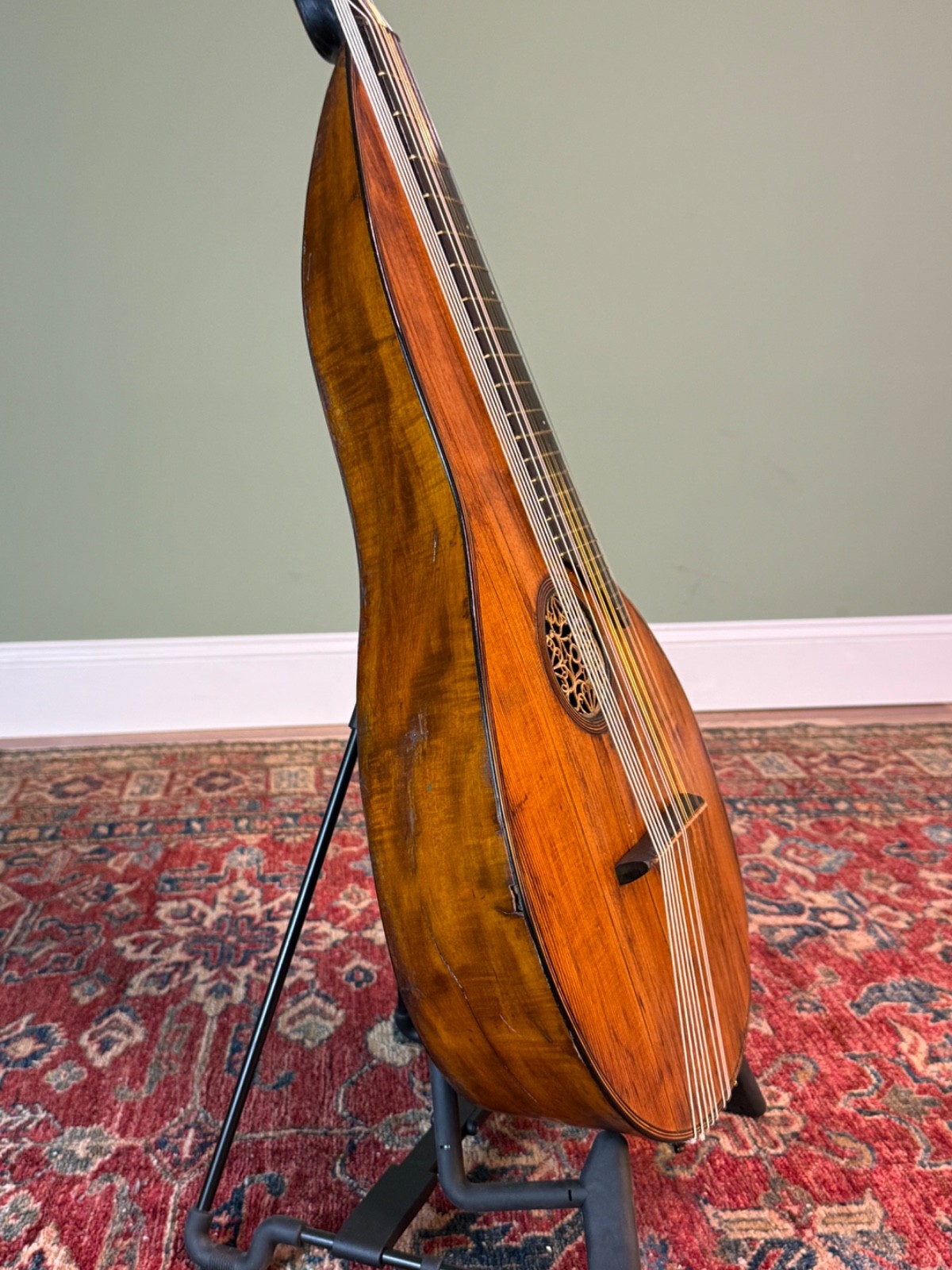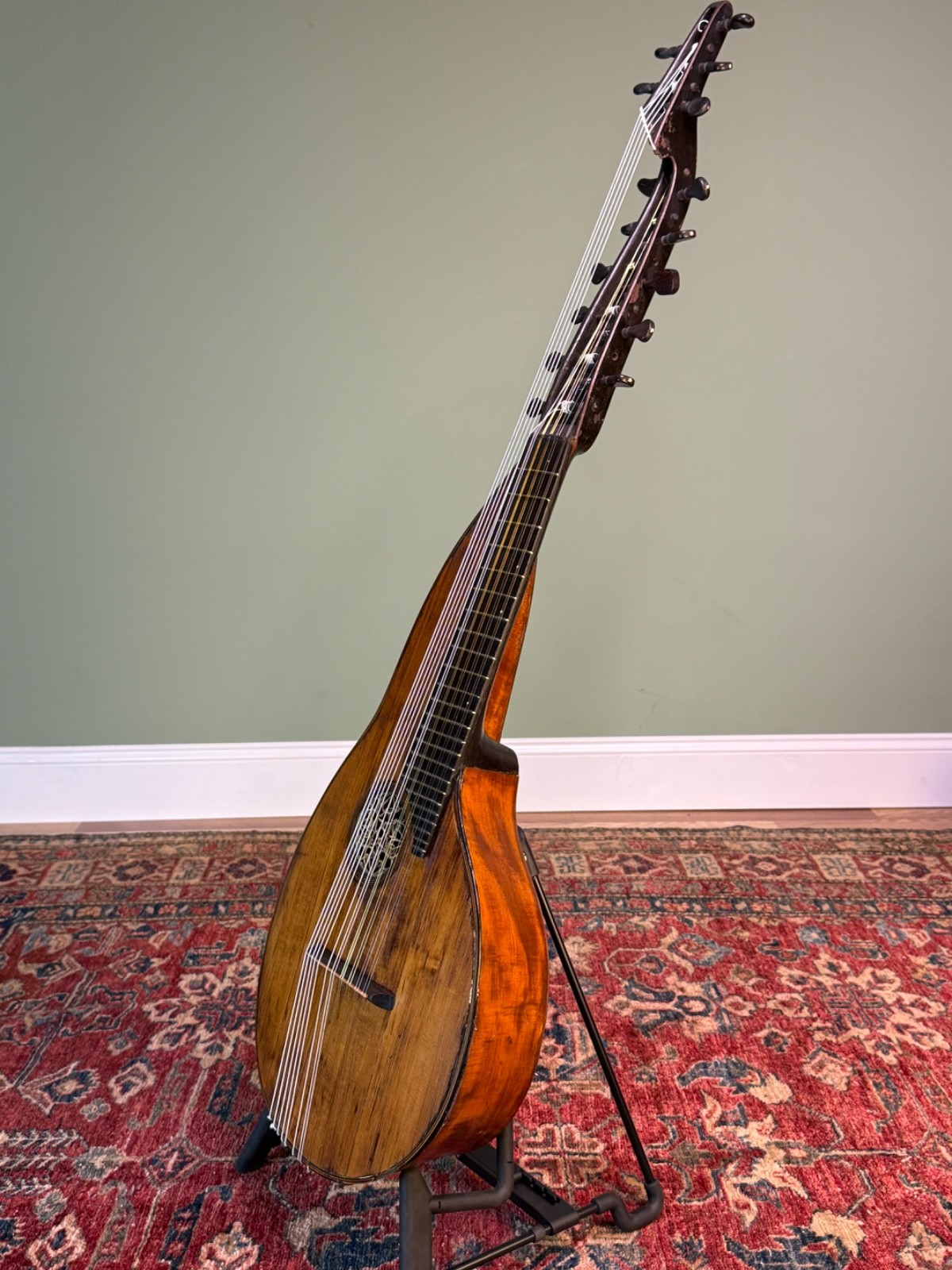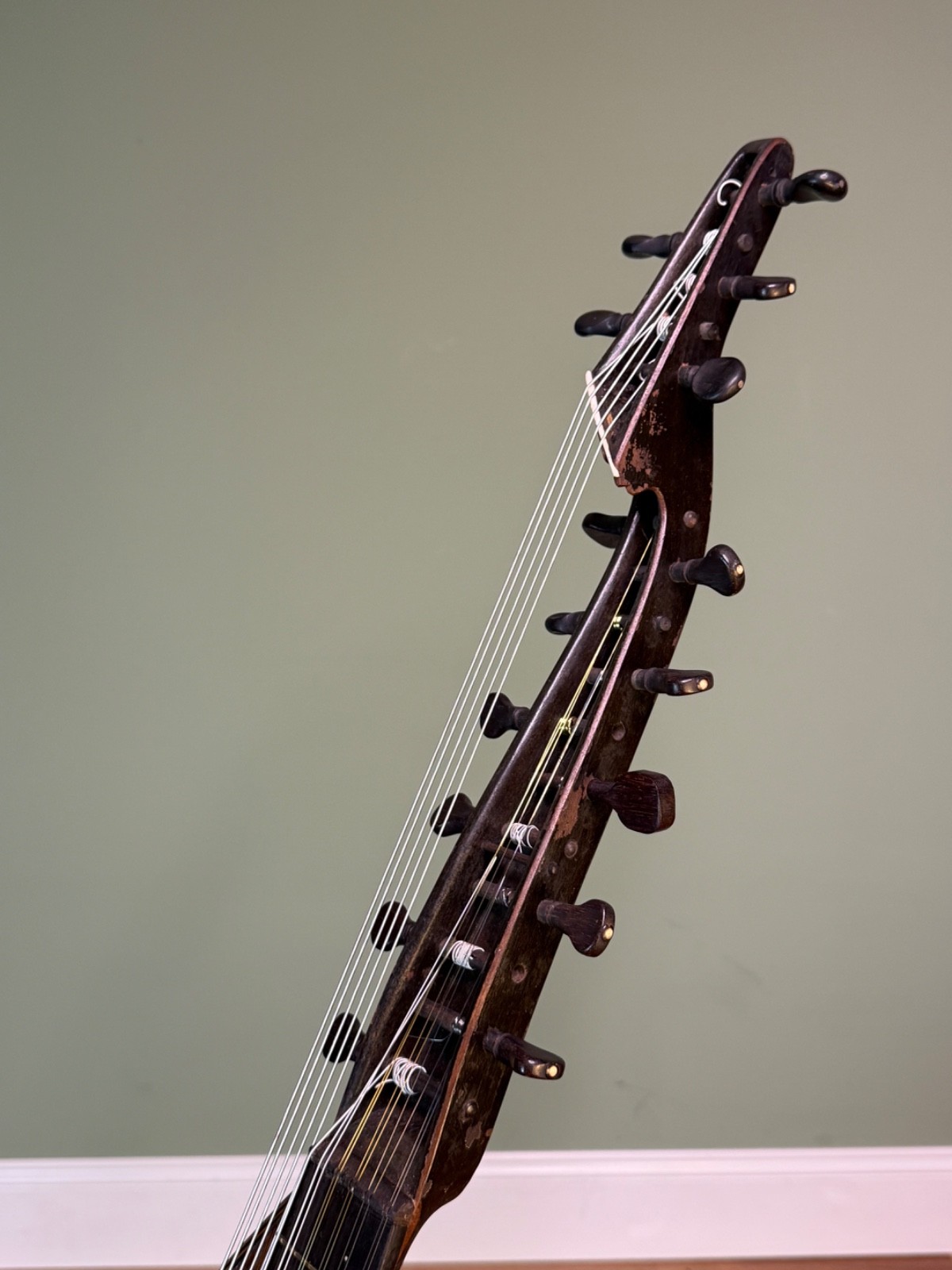
Circa 1787–1793 Renault & Chatelain Arch Cittern (Cistre Théorbé)

Circa 1787–1793 Renault & Chatelain Arch Cittern (Cistre Théorbé)

Circa 1787–1793 Renault & Chatelain Arch Cittern (Cistre Théorbé) – Rue de Braque, Paris

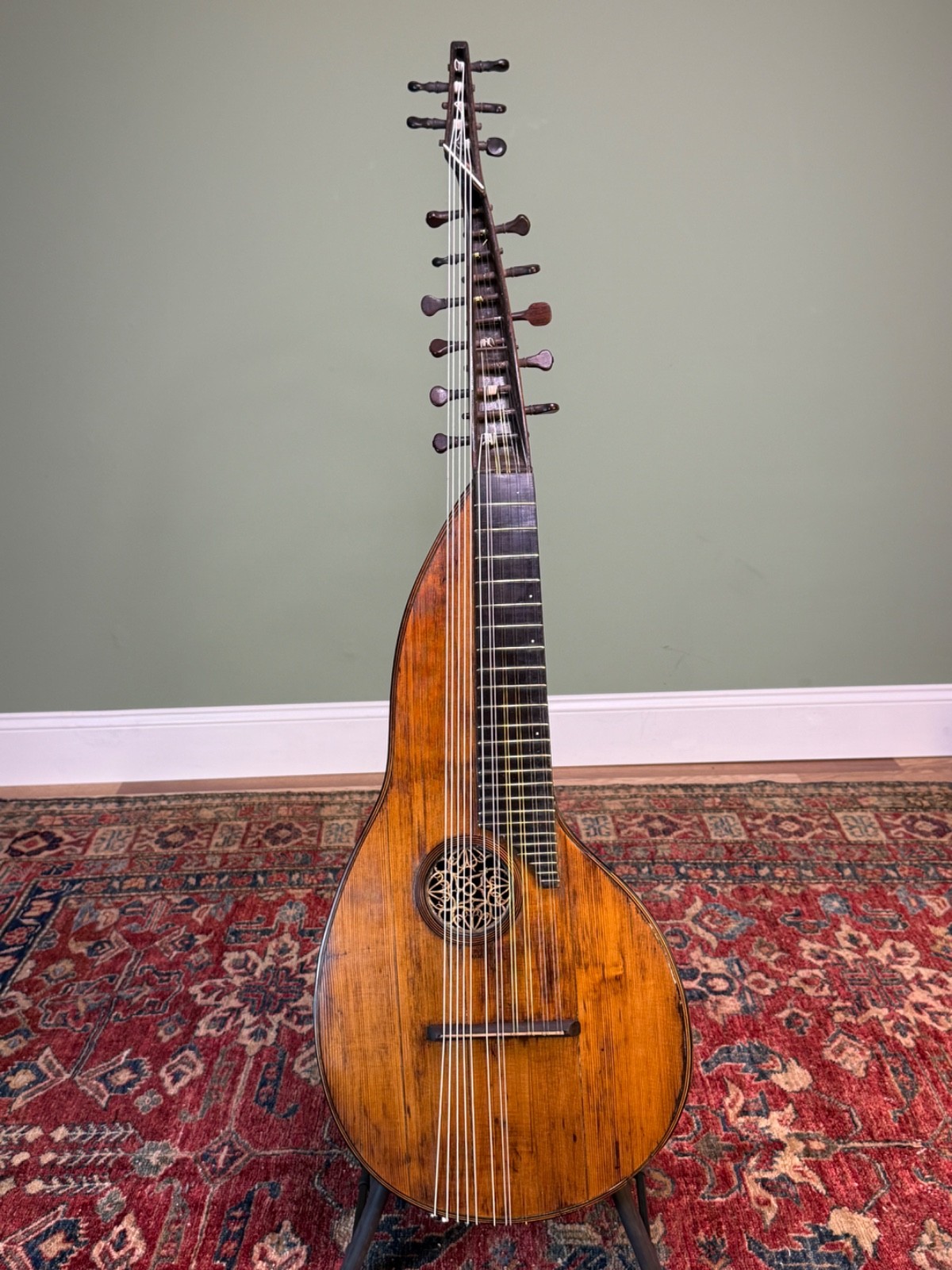
This is an 18th-century French arch cittern by Renault & Chatelain, Paris, which was building instruments during the final decades of the Ancien Régime.

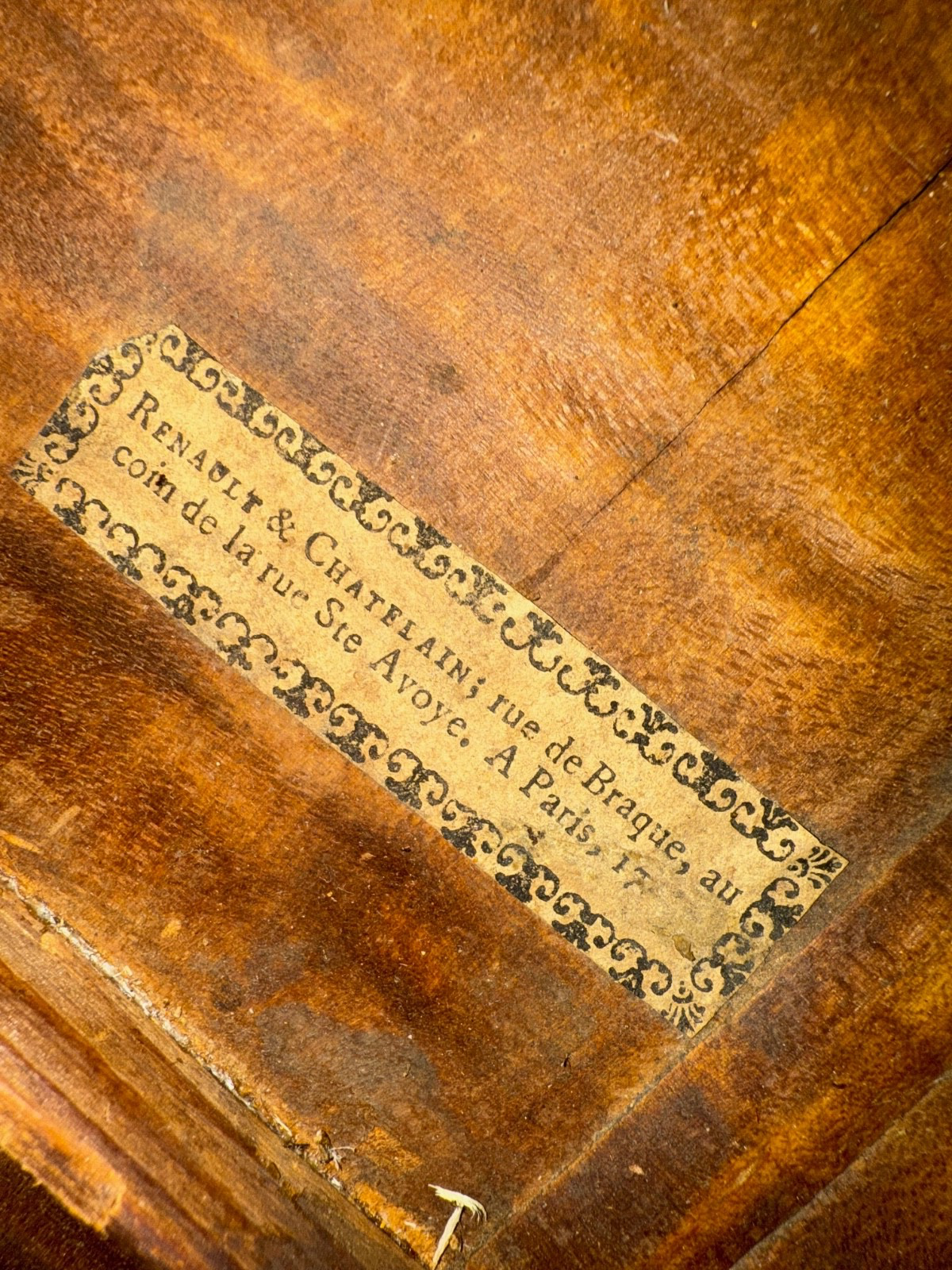
The instrument bears an internal printed paper label reading: “Renault & Chatelain; rue de Braque, au coin de la rue Ste Avoye. A Paris, 17..” (numbers following 17 are illegible).

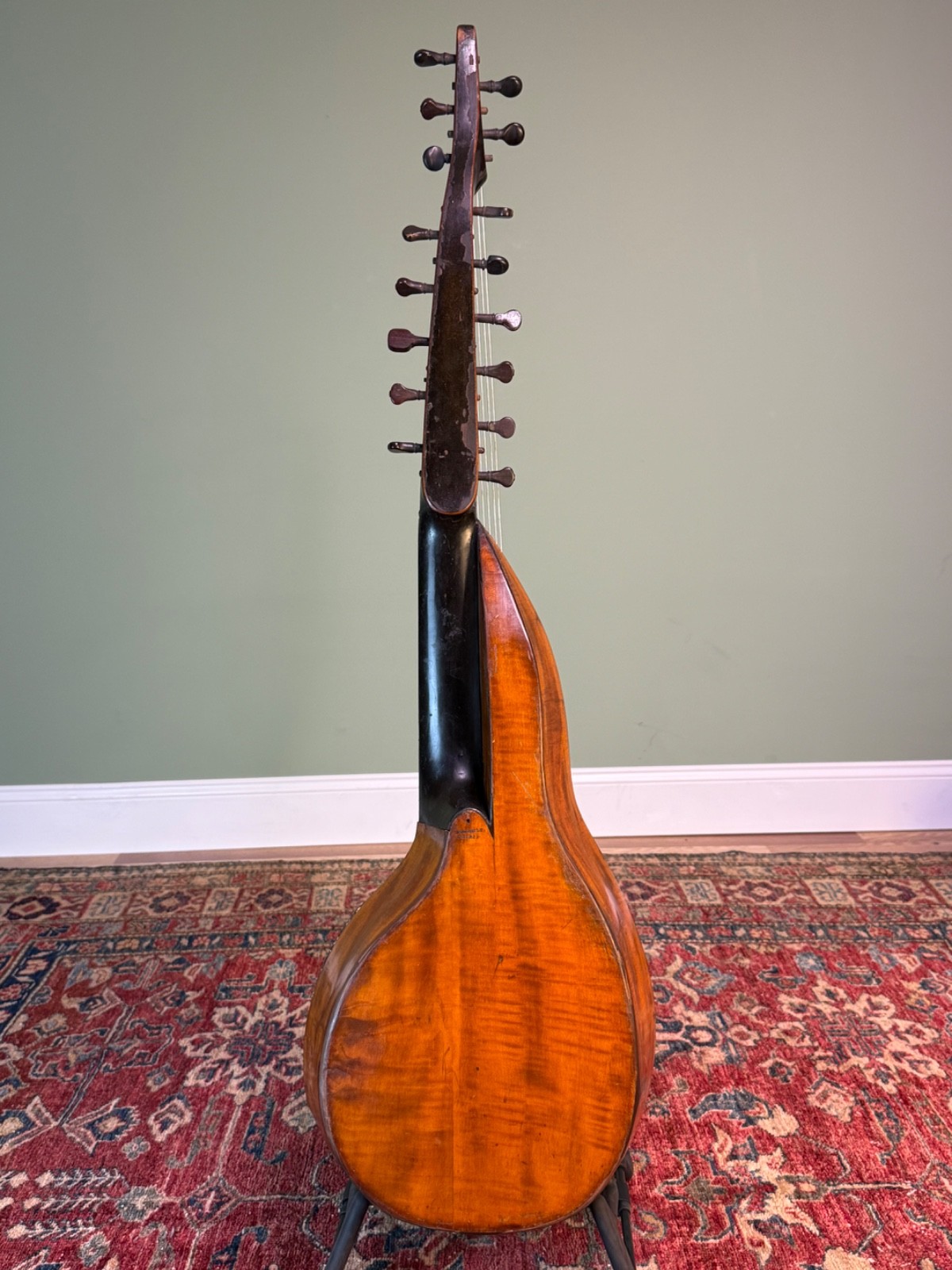
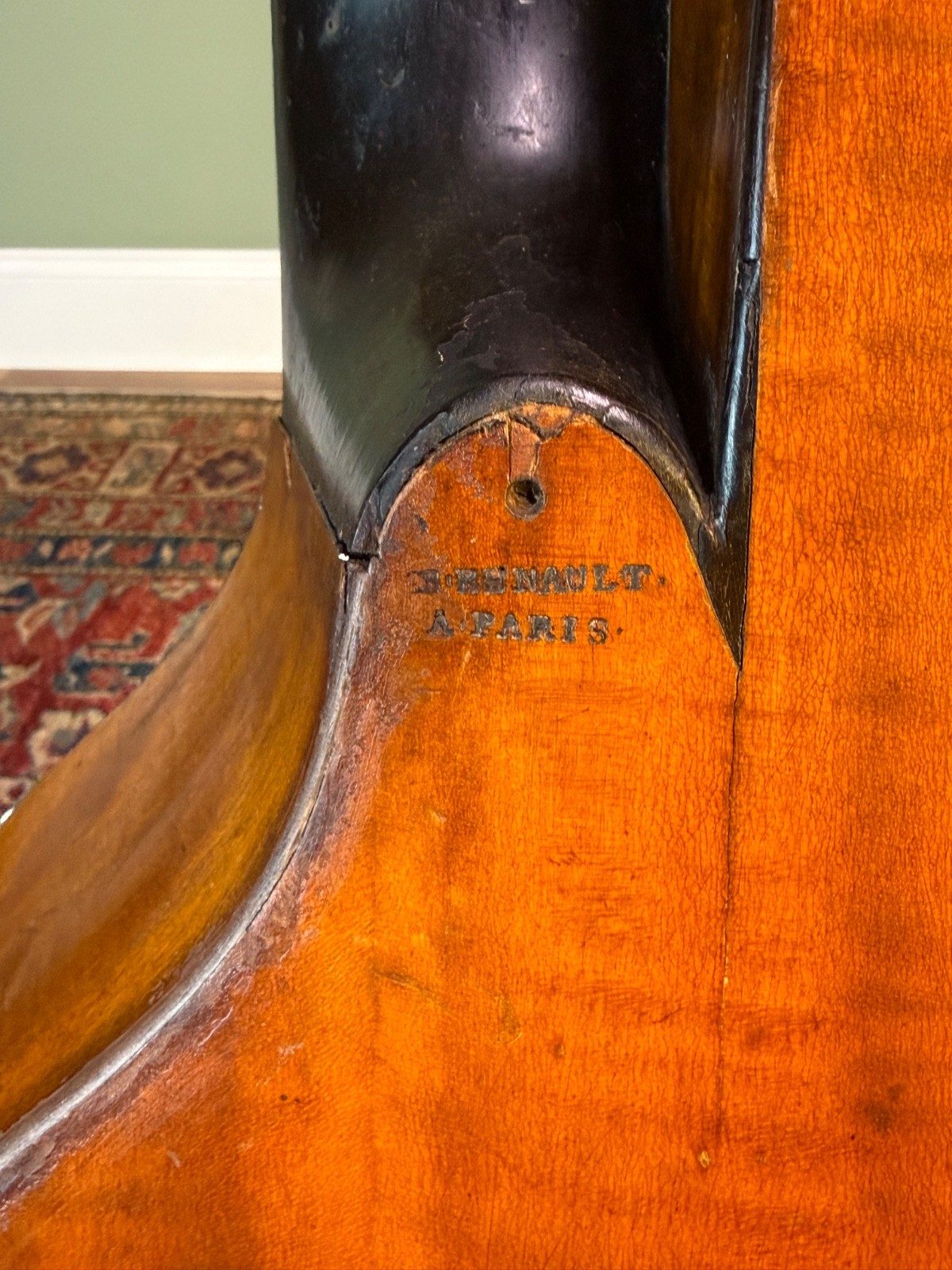
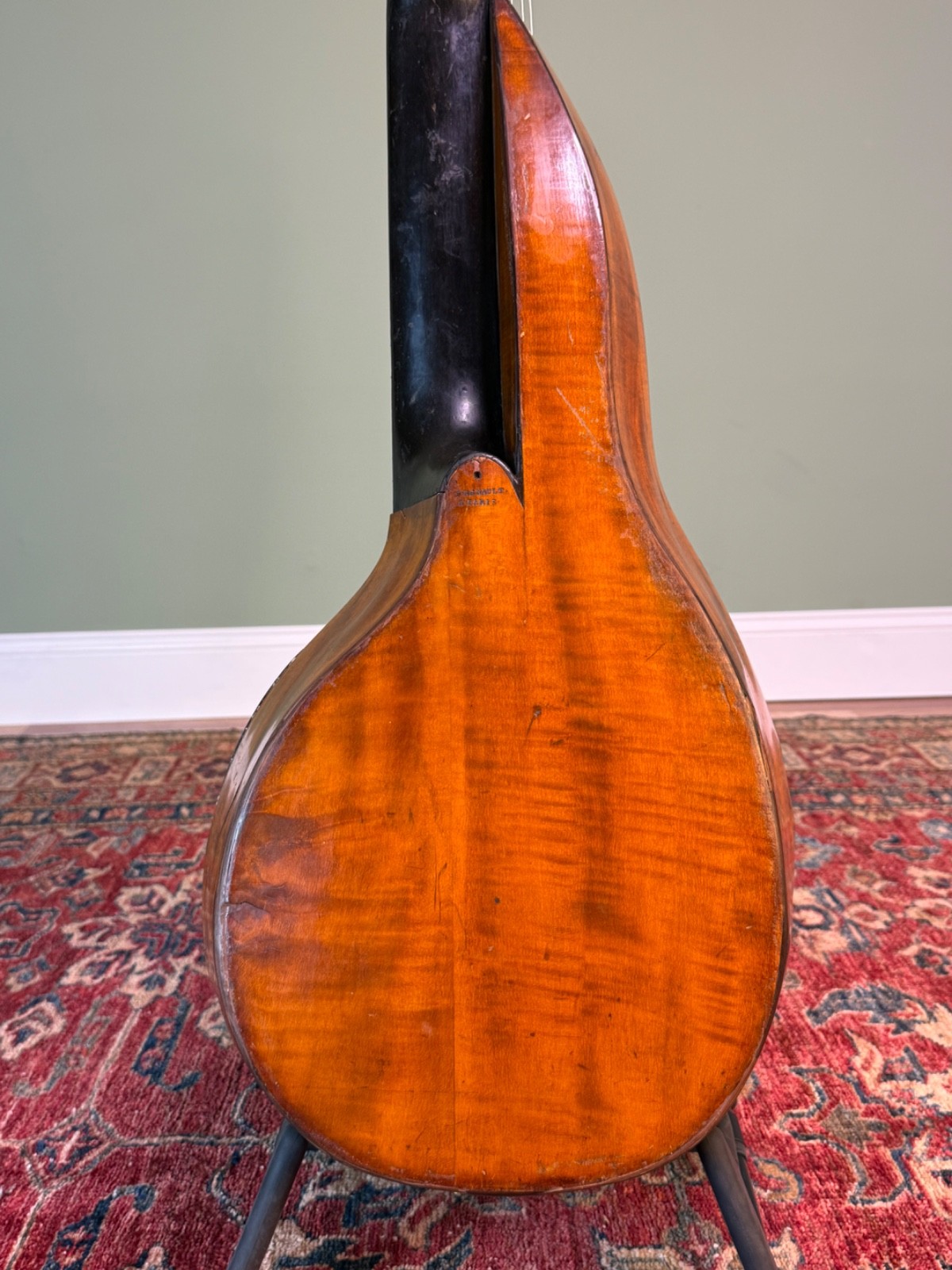
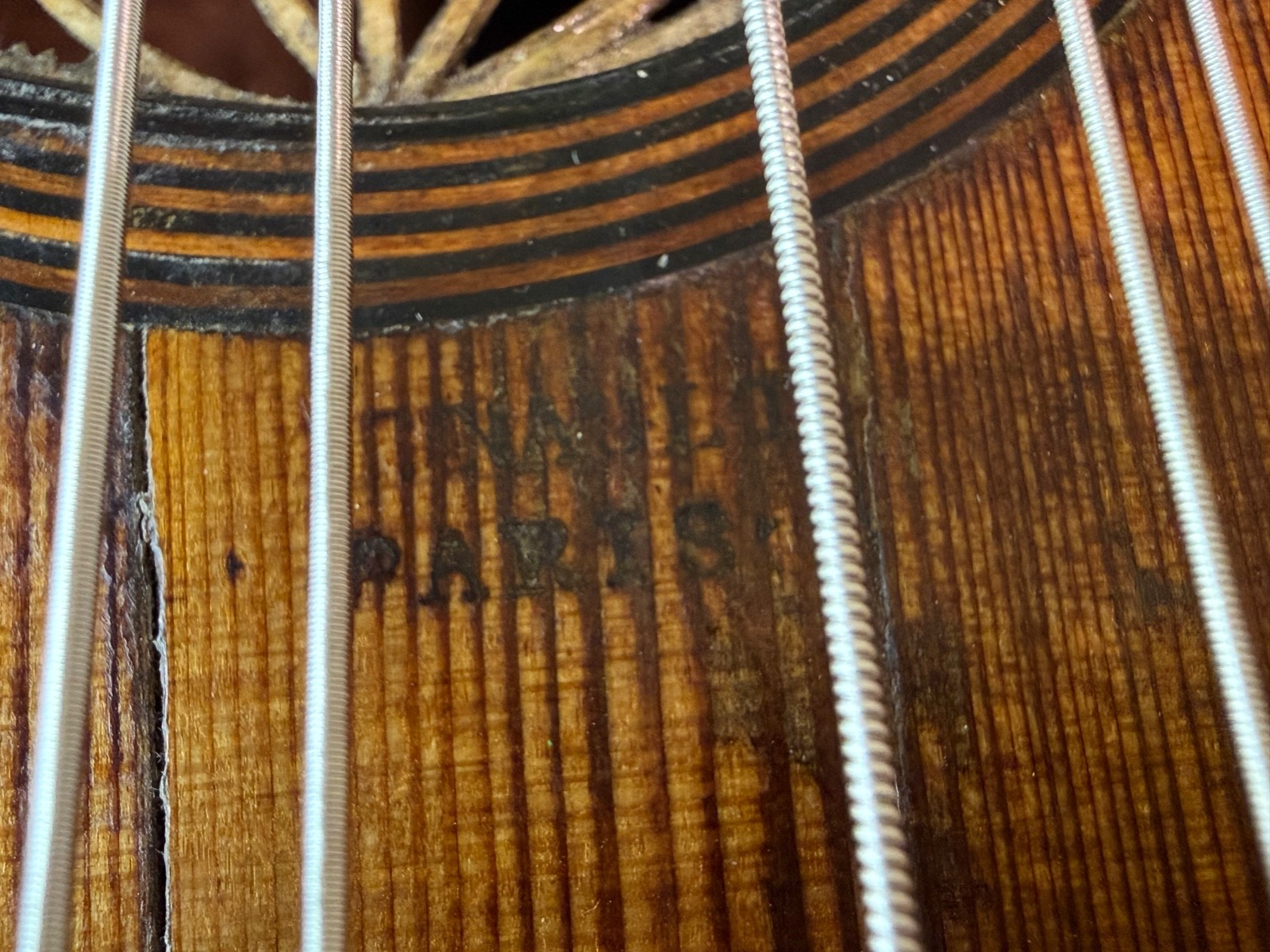
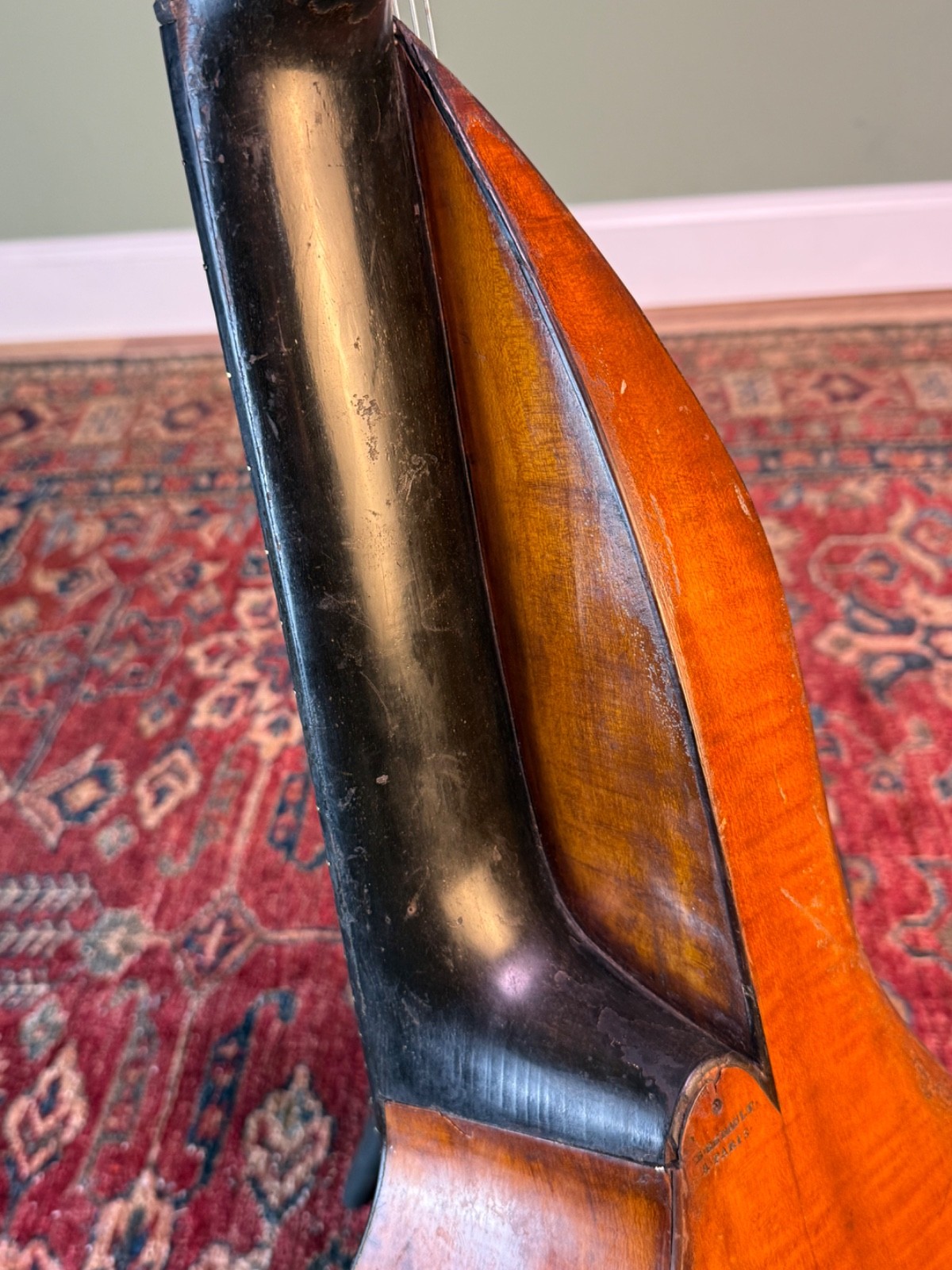
The back is stamped “Renault A Paris” , with additional Paris branding above the soundhole beneath the fingerboard extension. The Rue de Braque address corresponds with the firm’s documented activity in the late 1780s and early 1790s.

Renault & Chatelain were among the prominent Parisian makers of citterns and arch-citterns (cistre théorbé) during the final period of the instrument’s popularity in France. Their work reflects the refined aesthetic of late 18th-century Parisian plucked instruments, produced during the transitional years immediately preceding and following the French Revolution.

Construction

  • Pear-shaped arch body

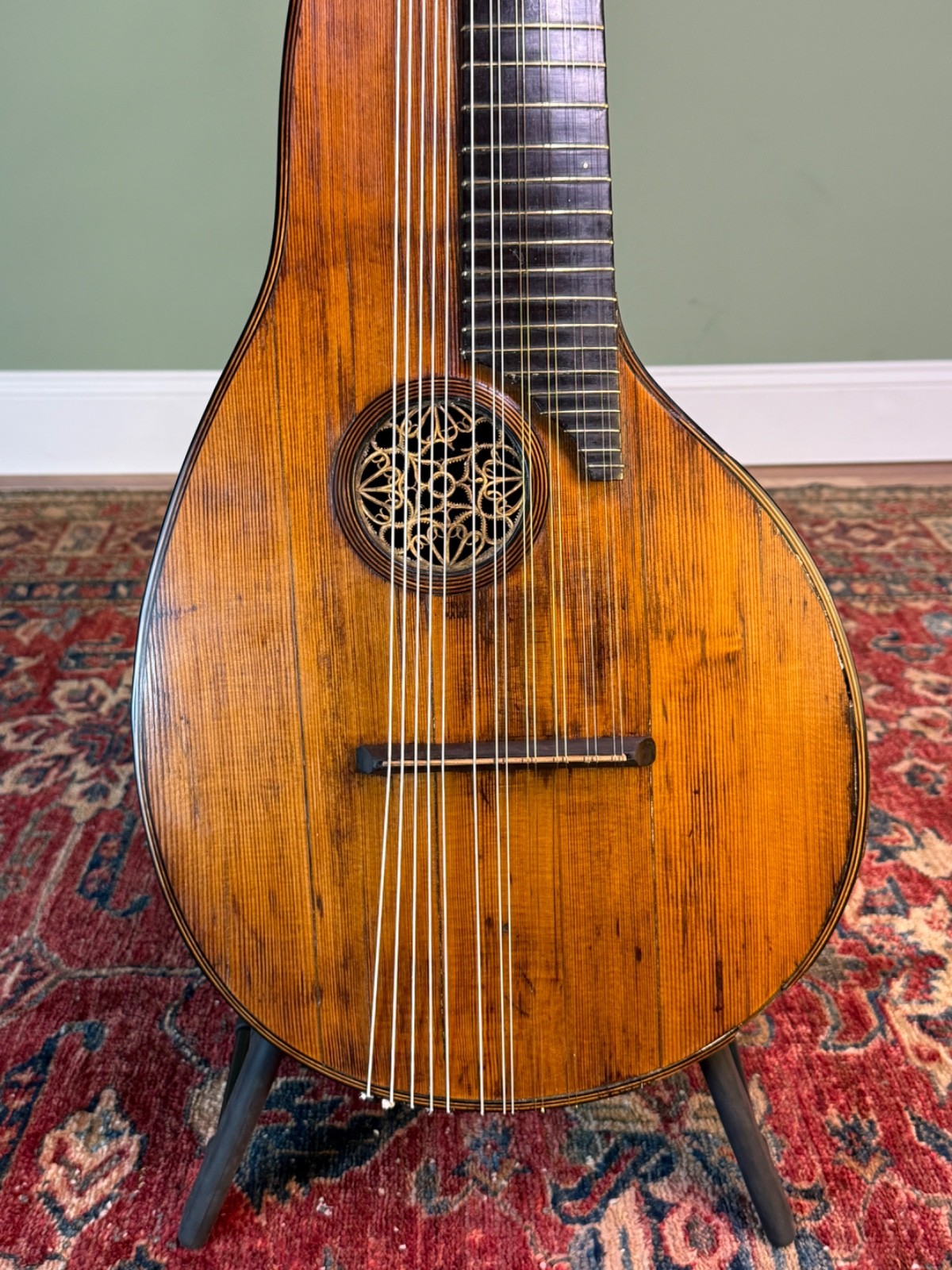
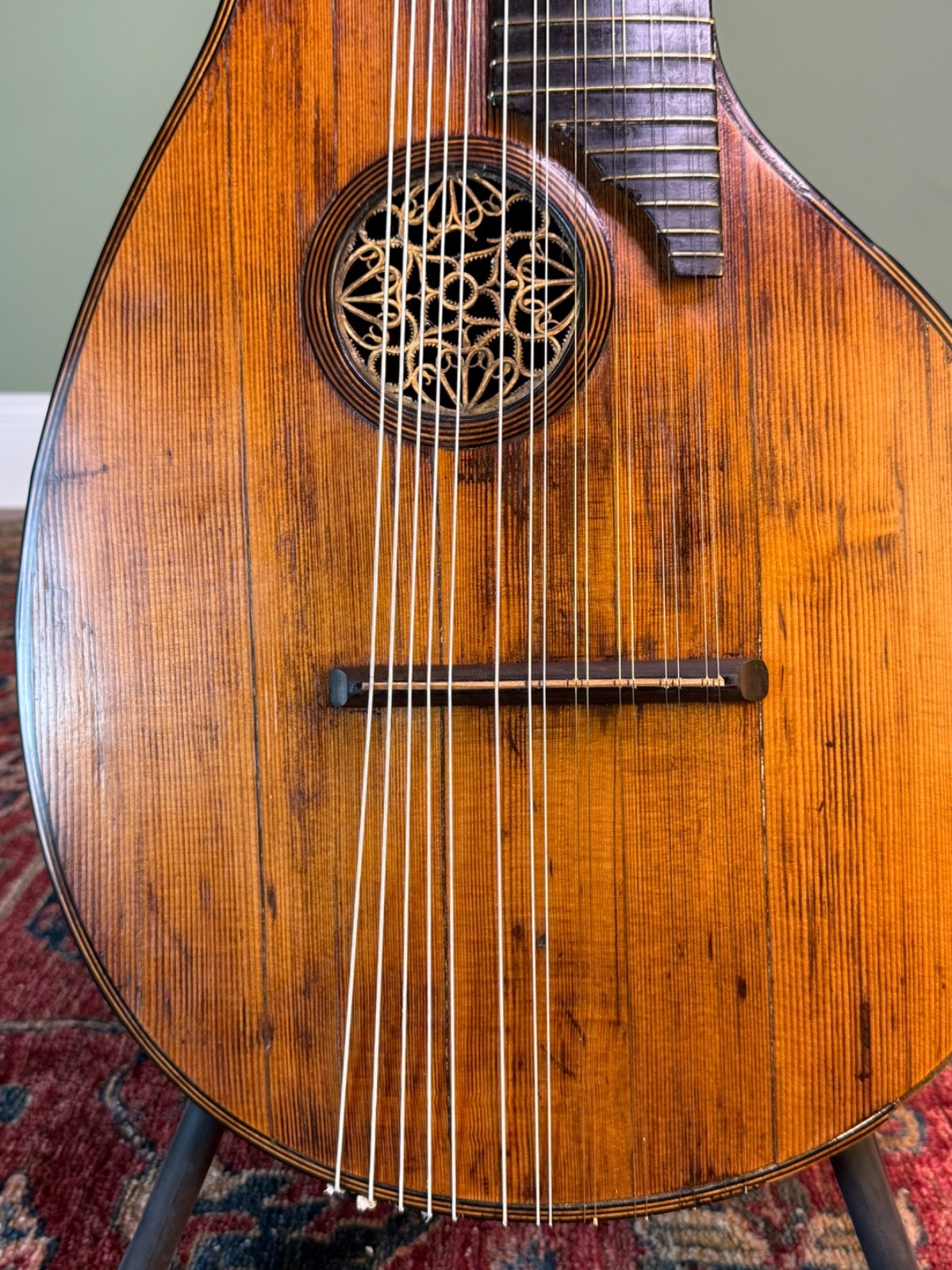
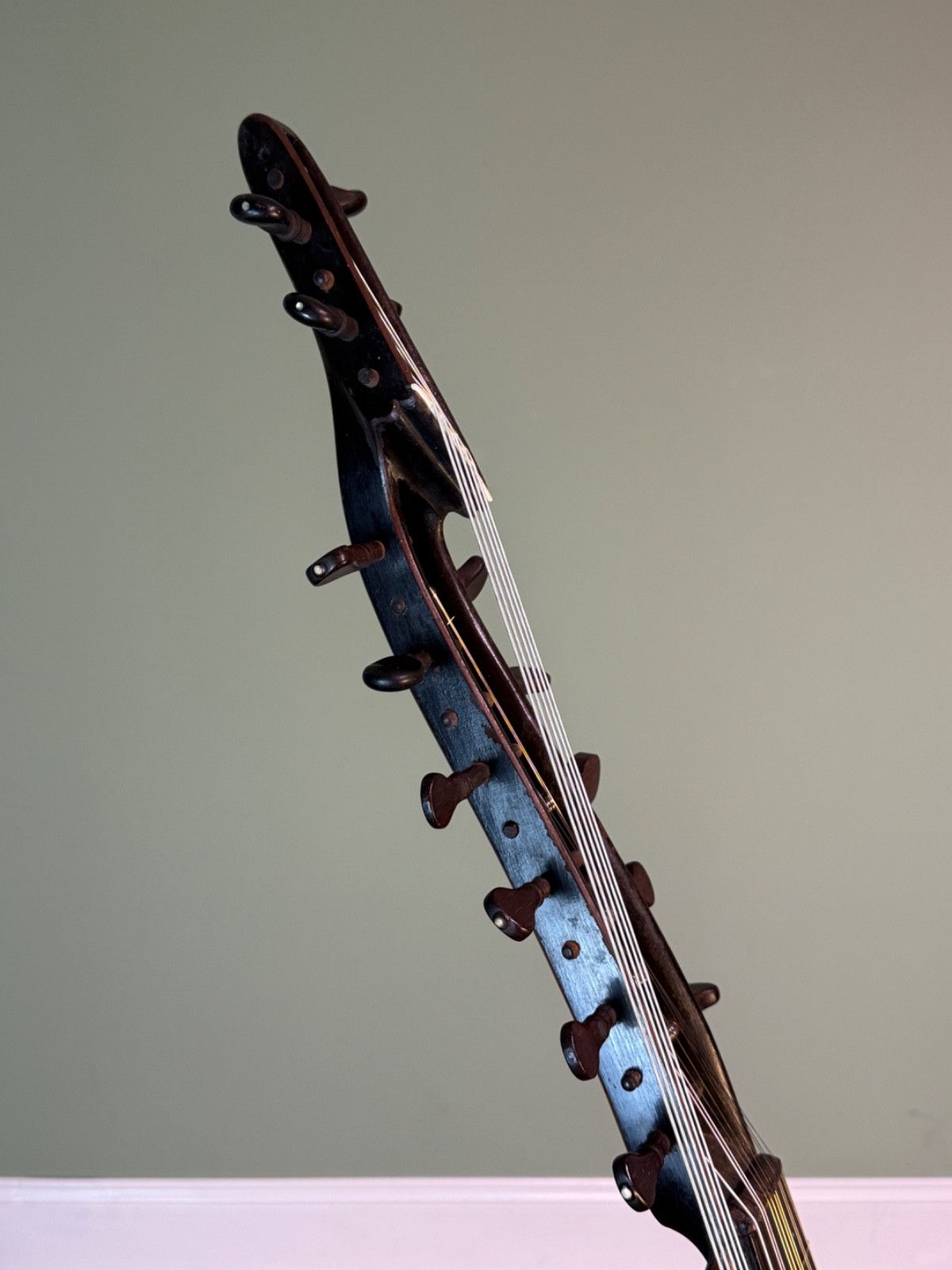
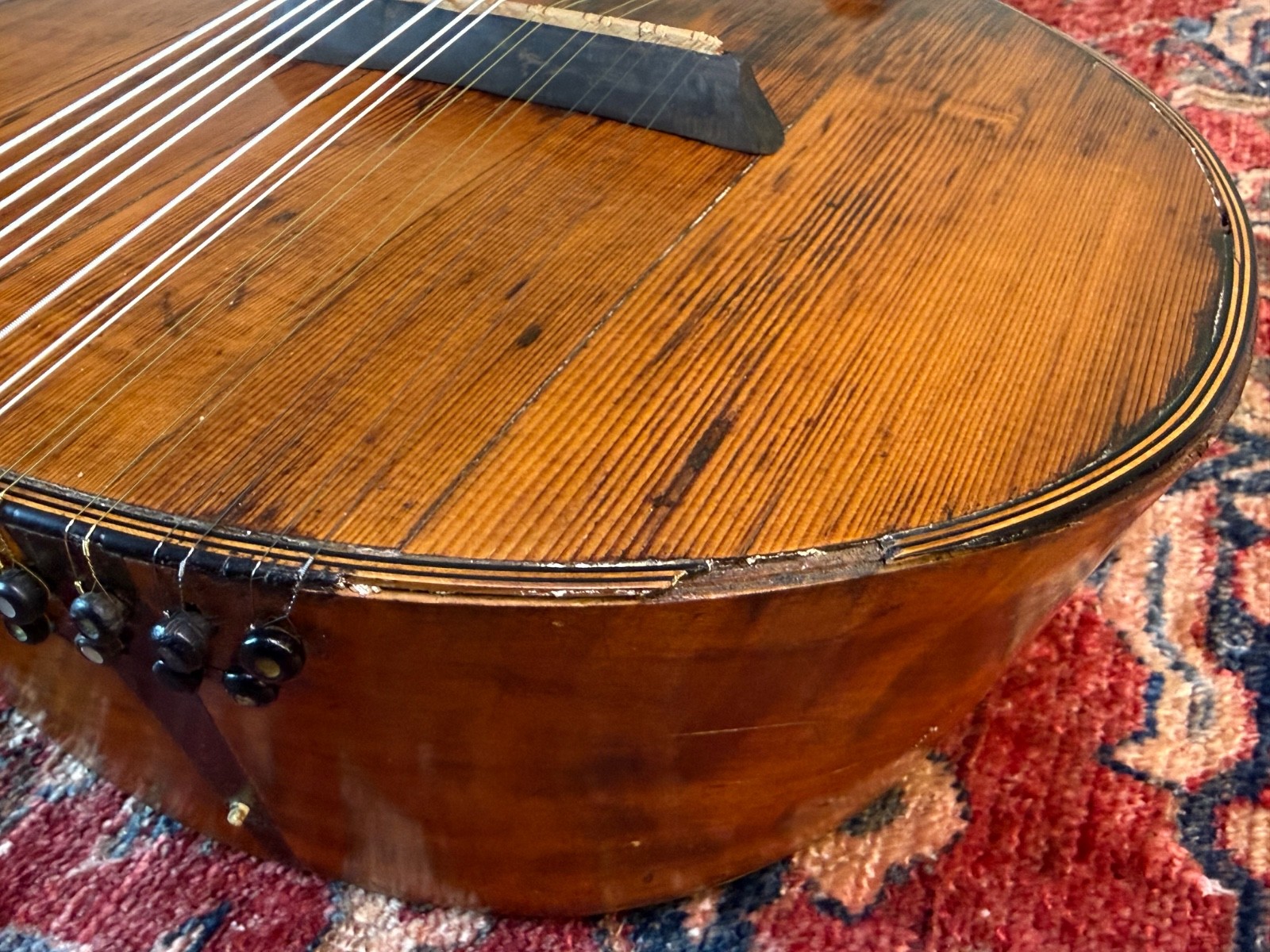
  • Spruce top

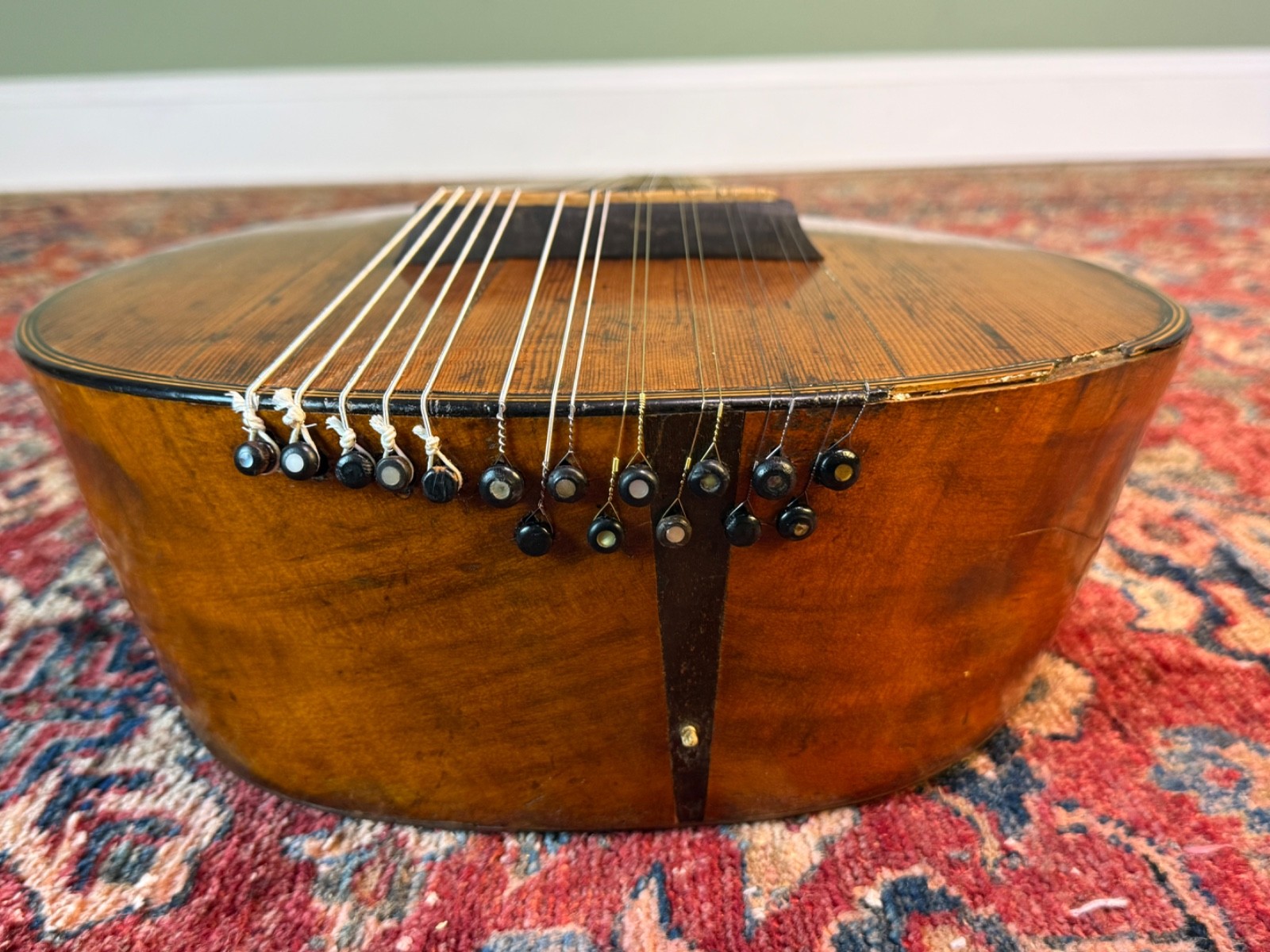
  • Flamed maple or sycamore back and sides

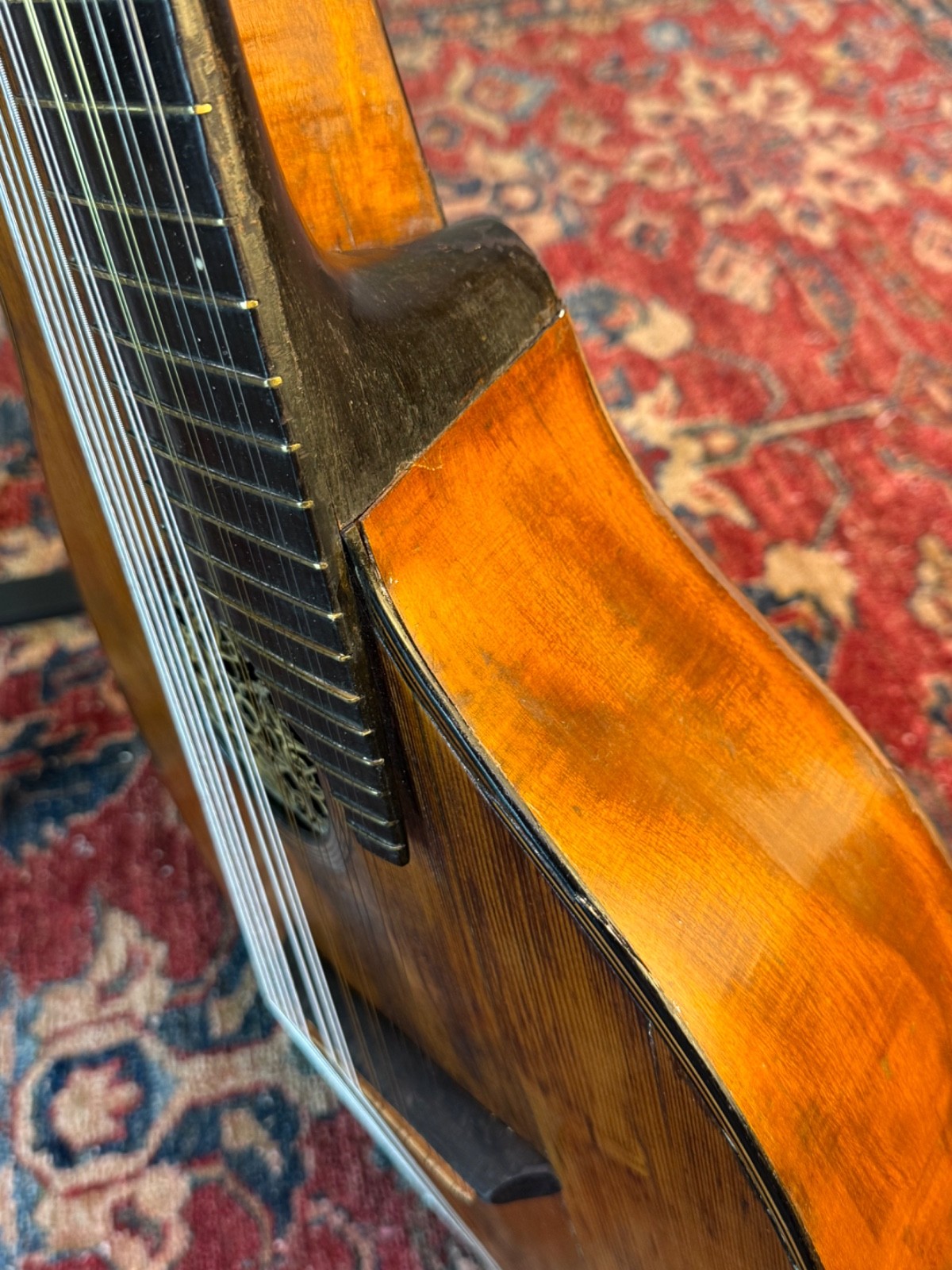
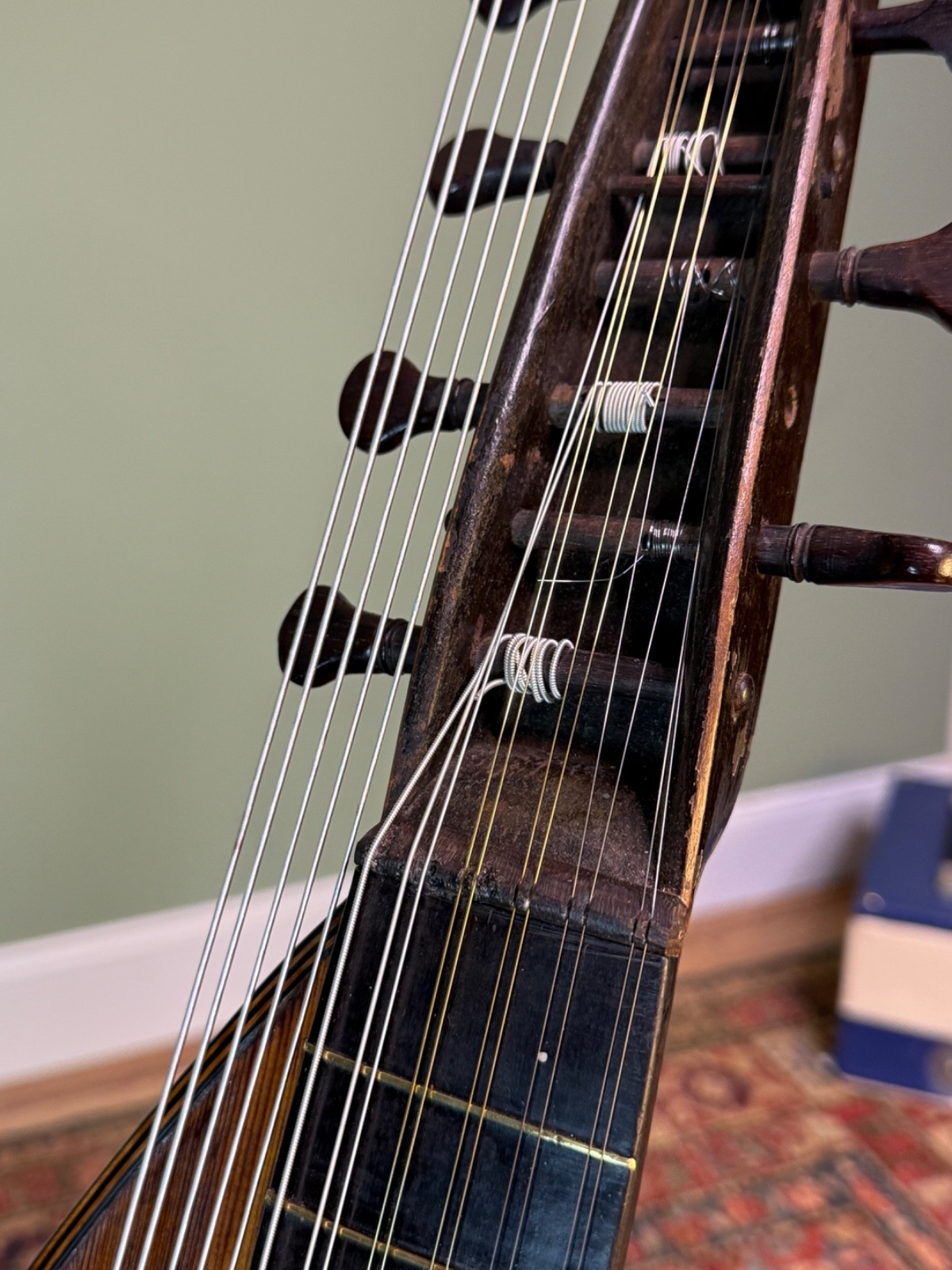
  • Ebony fingerboard

  • Pressed paper rosette (original)

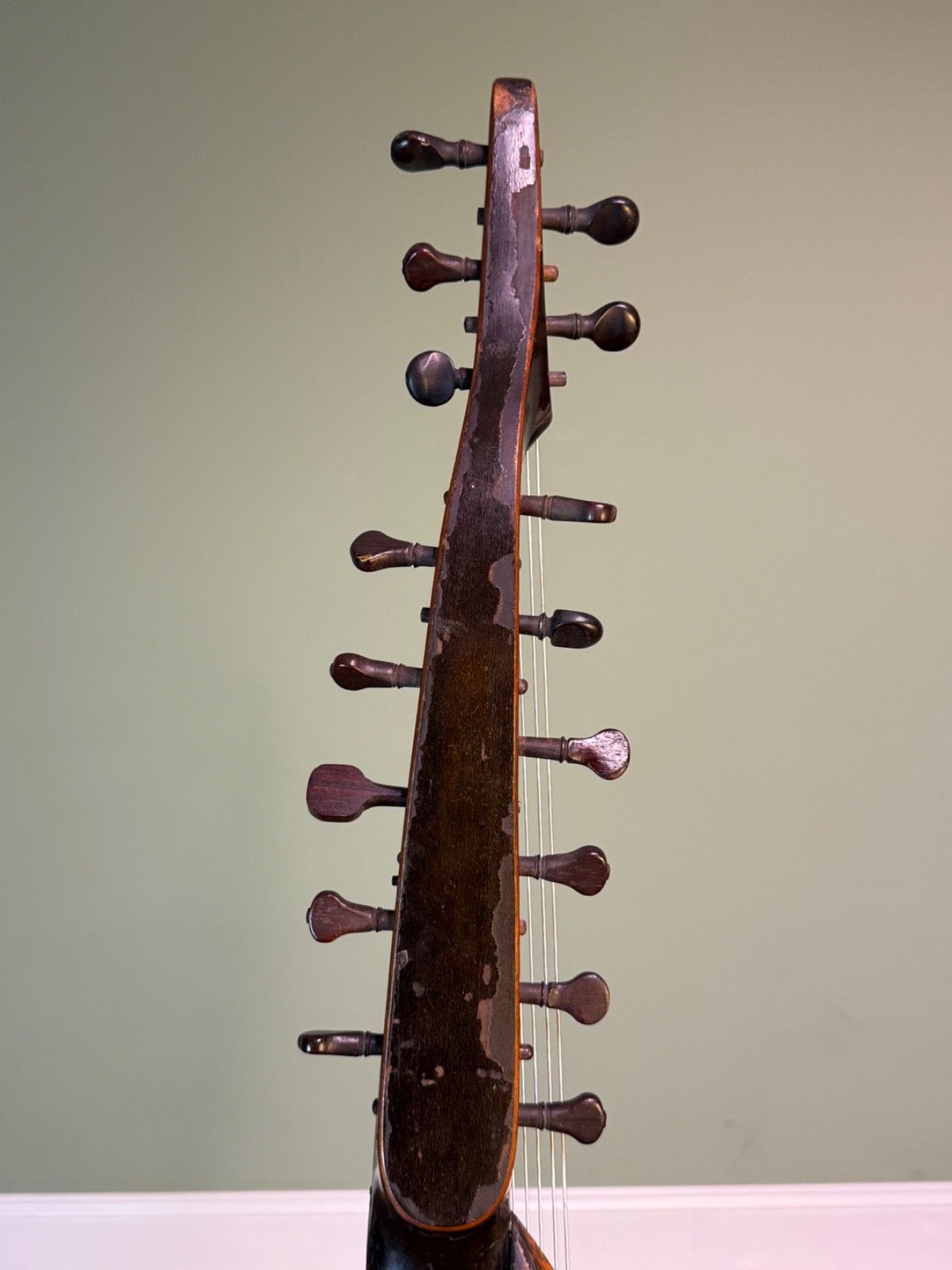
  • Mixed original and period pegs

  • Overall length: 44″

  • Fretted scale length: 19.75″

  • Harp string length: approximately 31″–32.5″

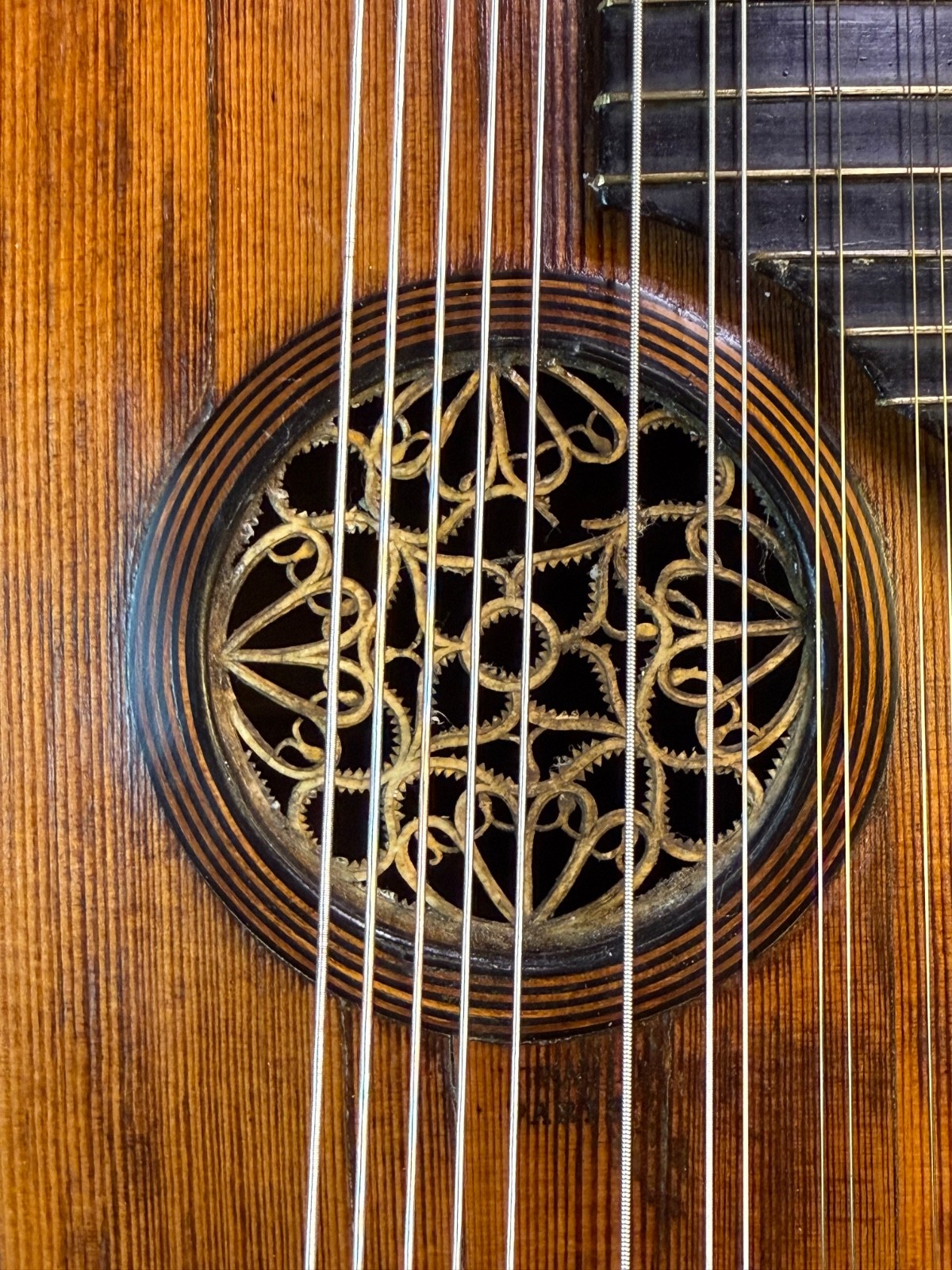
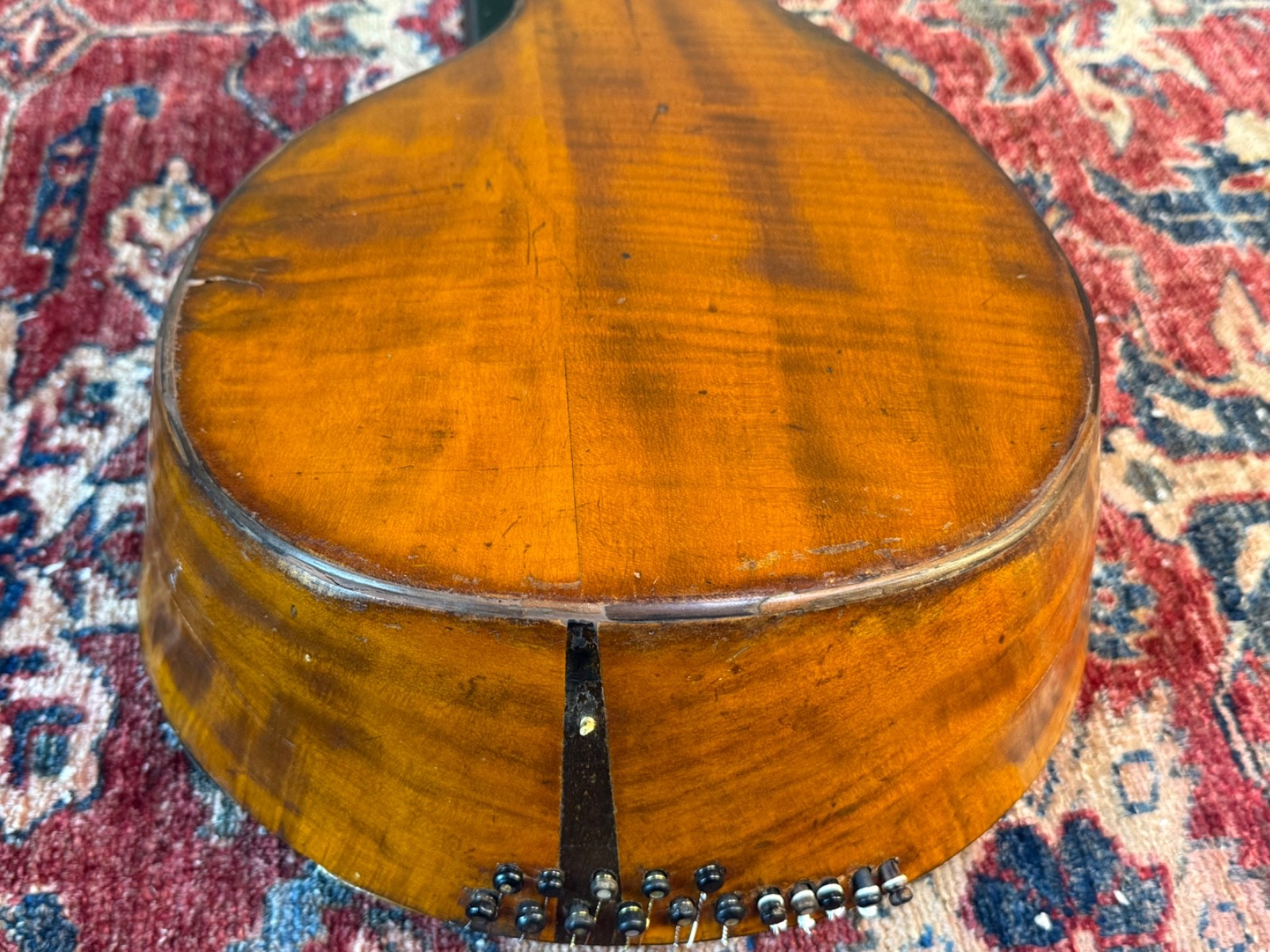
The instrument retains its original rosette and maker’s markings. The back exhibits attractive flame figure consistent with high-quality Parisian work of the period.

Condition

The instrument is structurally stable and currently playable.

  • Internal bracing has been professionally secured.

  • The top has been refinished.

  • Bridge is a modern reproduction of the original pattern.

  • Nut is later replacement.

  • Binding shows areas of repair and partial replacement.

  • Tuning pegs are largely original with some later substitutions.

  • String pegs are a combination of original and later examples.

  • Frets appear original and consistent with the ebony fingerboard.

The instrument is presently strung with custom silk-core strings on the harp courses and steel-core strings on the fretted side.

Historical Context

Arch citterns (cistre théorbé) represent one of the final evolutions of the wire-strung cittern tradition in France. By the late 18th century, the instrument was increasingly supplanted by the emerging classical guitar, making surviving examples from this period comparatively scarce.

Shipping in the Continental United States. Shipping available outside the Continental US.

Please feel free to ask any questions. Stand in pictures is not included.
The environment is important to us. At Golden Pickups, our packaging will be made of recycled materials and recyclable materials. We use the following recyclable packing material or recycled packing material:

  • Cardboard boxes for larger items or recycled-paper padded envelopes for small part or flat items. We do not use plastic envelopes or plastic containers.
  • Paper packing tape is used to seal boxes . Clear packing tape (plastic) may be used in a limited way to join pieces of bubble wrap or for affixing a label.
  • Kraft paper for padding and space/void filling : is made from 100% recycled paper and is fully recyclable.
  • Biodegradable peanuts for padding : are made from organic starch and decomposes in water leaving no toxic waste. Simply dissolve in water or place loosely in a garbage bag since they will decompose in a landfill.
  • Recycled green bubble wrap , that is made from up to 40% recycled content with up to 20% from post-consumer sources.
  • We will re-use other packing material from time to time.

$16,500.00

In stock

Circa 1787–1793 Renault & Chatelain Arch Cittern (Cistre Théorbé) – Rue de Braque, Paris

This is an 18th-century French arch cittern by Renault & Chatelain, Paris, which was building instruments during the final decades of the Ancien Régime.

The instrument bears an internal printed paper label reading: “Renault & Chatelain; rue de Braque, au coin de la rue Ste Avoye. A Paris, 17..” (numbers following 17 are illegible).

The back is stamped “Renault A Paris” , with additional Paris branding above the soundhole beneath the fingerboard extension. The Rue de Braque address corresponds with the firm’s documented activity in the late 1780s and early 1790s.

Renault & Chatelain were among the prominent Parisian makers of citterns and arch-citterns (cistre théorbé) during the final period of the instrument’s popularity in France. Their work reflects the refined aesthetic of late 18th-century Parisian plucked instruments, produced during the transitional years immediately preceding and following the French Revolution.

Construction

  • Pear-shaped arch body

  • Spruce top

  • Flamed maple or sycamore back and sides

  • Ebony fingerboard

  • Pressed paper rosette (original)

  • Mixed original and period pegs

  • Overall length: 44″

  • Fretted scale length: 19.75″

  • Harp string length: approximately 31″–32.5″

The instrument retains its original rosette and maker’s markings. The back exhibits attractive flame figure consistent with high-quality Parisian work of the period.

Condition

The instrument is structurally stable and currently playable.

  • Internal bracing has been professionally secured.

  • The top has been refinished.

  • Bridge is a modern reproduction of the original pattern.

  • Nut is later replacement.

  • Binding shows areas of repair and partial replacement.

  • Tuning pegs are largely original with some later substitutions.

  • String pegs are a combination of original and later examples.

  • Frets appear original and consistent with the ebony fingerboard.

The instrument is presently strung with custom silk-core strings on the harp courses and steel-core strings on the fretted side.

Historical Context

Arch citterns (cistre théorbé) represent one of the final evolutions of the wire-strung cittern tradition in France. By the late 18th century, the instrument was increasingly supplanted by the emerging classical guitar, making surviving examples from this period comparatively scarce.

Shipping in the Continental United States. Shipping available outside the Continental US.

Please feel free to ask any questions. Stand in pictures is not included.
The environment is important to us. At Golden Pickups, our packaging will be made of recycled materials and recyclable materials. We use the following recyclable packing material or recycled packing material:

  • Cardboard boxes for larger items or recycled-paper padded envelopes for small part or flat items. We do not use plastic envelopes or plastic containers.
  • Paper packing tape is used to seal boxes . Clear packing tape (plastic) may be used in a limited way to join pieces of bubble wrap or for affixing a label.
  • Kraft paper for padding and space/void filling : is made from 100% recycled paper and is fully recyclable.
  • Biodegradable peanuts for padding : are made from organic starch and decomposes in water leaving no toxic waste. Simply dissolve in water or place loosely in a garbage bag since they will decompose in a landfill.
  • Recycled green bubble wrap , that is made from up to 40% recycled content with up to 20% from post-consumer sources.
  • We will re-use other packing material from time to time.

Description

Circa 1787–1793 Renault & Chatelain Arch Cittern (Cistre Théorbé) – Rue de Braque, Paris

This is an 18th-century French arch cittern by Renault & Chatelain, Paris, which was building instruments during the final decades of the Ancien Régime.

The instrument bears an internal printed paper label reading: “Renault & Chatelain; rue de Braque, au coin de la rue Ste Avoye. A Paris, 17..” (numbers following 17 are illegible).

The back is stamped “Renault A Paris” , with additional Paris branding above the soundhole beneath the fingerboard extension. The Rue de Braque address corresponds with the firm’s documented activity in the late 1780s and early 1790s.

Renault & Chatelain were among the prominent Parisian makers of citterns and arch-citterns (cistre théorbé) during the final period of the instrument’s popularity in France. Their work reflects the refined aesthetic of late 18th-century Parisian plucked instruments, produced during the transitional years immediately preceding and following the French Revolution.

Construction

  • Pear-shaped arch body

  • Spruce top

  • Flamed maple or sycamore back and sides

  • Ebony fingerboard

  • Pressed paper rosette (original)

  • Mixed original and period pegs

  • Overall length: 44″

  • Fretted scale length: 19.75″

  • Harp string length: approximately 31″–32.5″

The instrument retains its original rosette and maker’s markings. The back exhibits attractive flame figure consistent with high-quality Parisian work of the period.

Condition

The instrument is structurally stable and currently playable.

  • Internal bracing has been professionally secured.

  • The top has been refinished.

  • Bridge is a modern reproduction of the original pattern.

  • Nut is later replacement.

  • Binding shows areas of repair and partial replacement.

  • Tuning pegs are largely original with some later substitutions.

  • String pegs are a combination of original and later examples.

  • Frets appear original and consistent with the ebony fingerboard.

The instrument is presently strung with custom silk-core strings on the harp courses and steel-core strings on the fretted side.

Historical Context

Arch citterns (cistre théorbé) represent one of the final evolutions of the wire-strung cittern tradition in France. By the late 18th century, the instrument was increasingly supplanted by the emerging classical guitar, making surviving examples from this period comparatively scarce.

Shipping in the Continental United States. Shipping available outside the Continental US.

Please feel free to ask any questions. Stand in pictures is not included.
The environment is important to us. At Golden Pickups, our packaging will be made of recycled materials and recyclable materials. We use the following recyclable packing material or recycled packing material:

  • Cardboard boxes for larger items or recycled-paper padded envelopes for small part or flat items. We do not use plastic envelopes or plastic containers.
  • Paper packing tape is used to seal boxes . Clear packing tape (plastic) may be used in a limited way to join pieces of bubble wrap or for affixing a label.
  • Kraft paper for padding and space/void filling : is made from 100% recycled paper and is fully recyclable.
  • Biodegradable peanuts for padding : are made from organic starch and decomposes in water leaving no toxic waste. Simply dissolve in water or place loosely in a garbage bag since they will decompose in a landfill.
  • Recycled green bubble wrap , that is made from up to 40% recycled content with up to 20% from post-consumer sources.
  • We will re-use other packing material from time to time.

Additional information

Weight 15.0 lbs
Dimensions 52.0 × 20.0 × 10.0 in
Handedness

Right-Handed

Type

Cittern

Body Material

["Ebony", "Maple", "Rosewood", "Walnut"]

String Configuration

6 String

Number of Frets

24

Country of Origin

France

Item Condition

Used

Brand

Renault & Chatelain

Product Enquiry